Strike Back

- Platform: PC
- Engine: Custom Engine
- Development Time: 14 Months
- Team Size: 14
- Developer: Team Fuzzy Guard
- My Role: Combat Designer and Playtest Director
- Download Link: Steam Release
Strike Back is a 2D traditional fighting game that bends genre traditions to create a complete fighting game experience for newcomers to the genre, as well as allow for the game’s development to be completed in just over a year. Players can select between three different characters with radically different move lists and fighting abilities. Despite each character having a limited amount of moves due to time constraints, we were able to make the most of what few attack animations we had to work with to make fully realized and functional characters. In addition to approximately 4 months of planning and pre-production, this game was made over the course of a single academic year at DigiPen Institute of Technology by a full multi-disciplinary team of students.
My Contributions to this project include:
- Assisted in the design of character move lists based on what martial art style they use, and what attacks they will need in order to have a complete move list.
- Organizing Playtests both on fellow DigiPen students, as well as at several fighting game events, including major tournaments.
- Communicated with team artists to figure out what moves are capable of being animated in a reasonable time.
- Balance adjustments to character data and attack data (health, movement speed, frame data, damage, hit/hurtboxes, etc.) based on playtest results.
Time Management and Feasibility
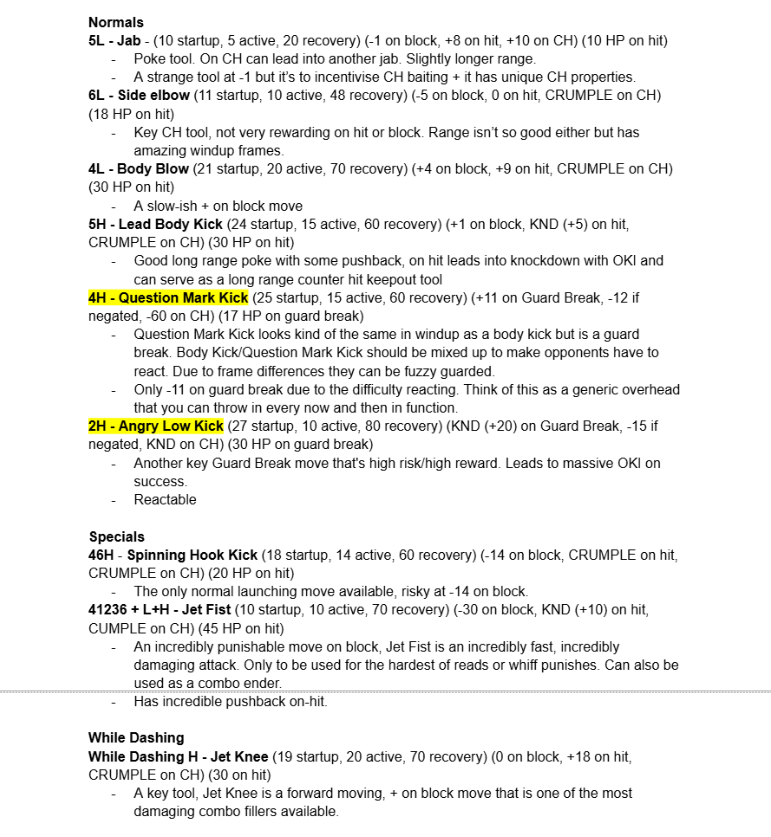
When we first began work on Strike Back, we had, to put it simply, massively overscoped what we were capable of in terms of both mechanics and character gameplay design. This was most evident in the number of characters we initially planned to include in the game, as well as the amount of moves each character had. Our overzealousness was almost immediately made known to us by our program’s art professors and TAs, who bluntly informed us this amount of work would be impossible for our art team to accomplish within a school year. Given this development, we downscaled immediately on design, which also removed some of the load the artists would have to deal with. We simplified and removed mechanics, cut down the planned number of playable characters to 2, and made move lists extremely small and simple.
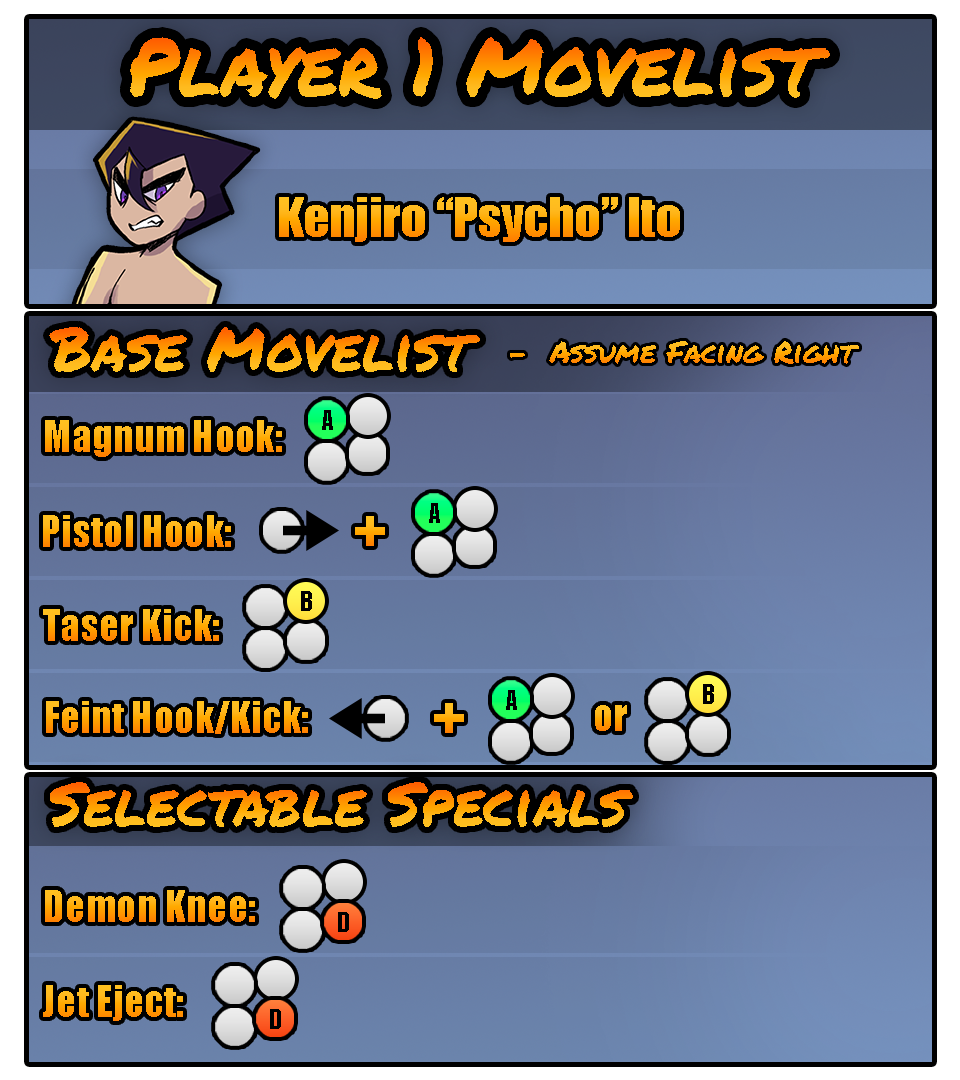
Despite realizing these problems very early on, these mistakes haunted us for almost all of the game’s development, as our initial over scoping left us uncertain in our vision of the game throughout development. This resulted in many decisions being walked back, and entire system mechanics and overall character designs being overhauled over the course of the school year.
The biggest takeaway I got from this experience, even if I wasn’t in charge of every decision, was to have a good idea of the feasibility of a project before it begins. Obviously changes in scope are inevitable, but preventing issues of overscoping this massive has been and will continue to be a large priority of mine in every project I work on.
The Value of User Research Results in Fighting Game System Design
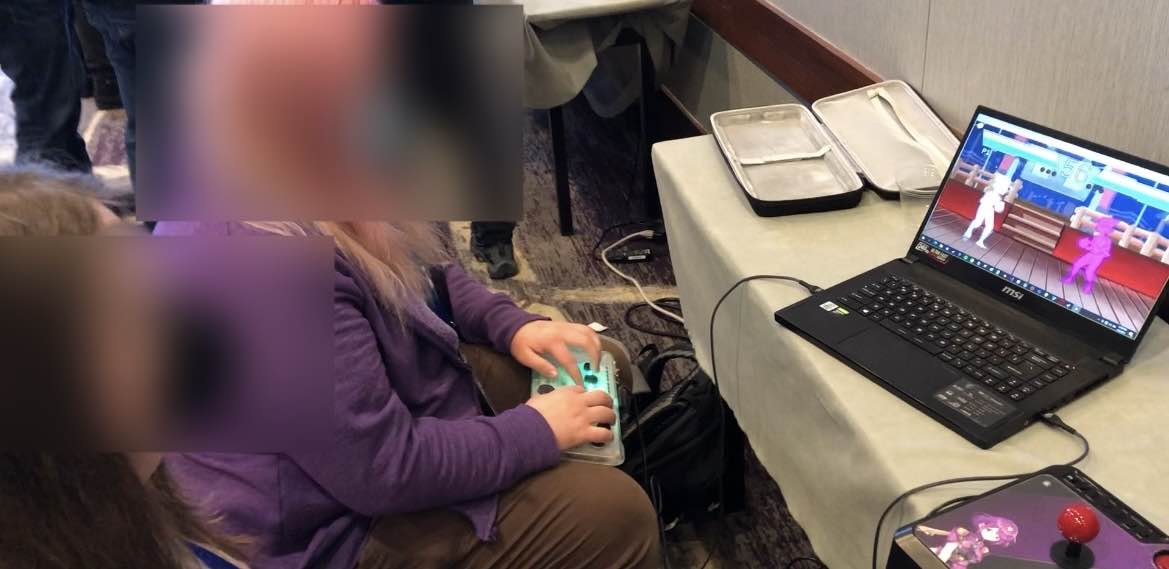
Working as both a system designer and a user researcher on this project, I was afforded significant insight into how to adjust balance and gameplay mechanics based on feedback. For fighting games specifically, I was able to get extra insight through testing the game at fighting game events, including the major Frosty Faustings XV tournament in Lombard, Illinois.
Frame Data Adjustments
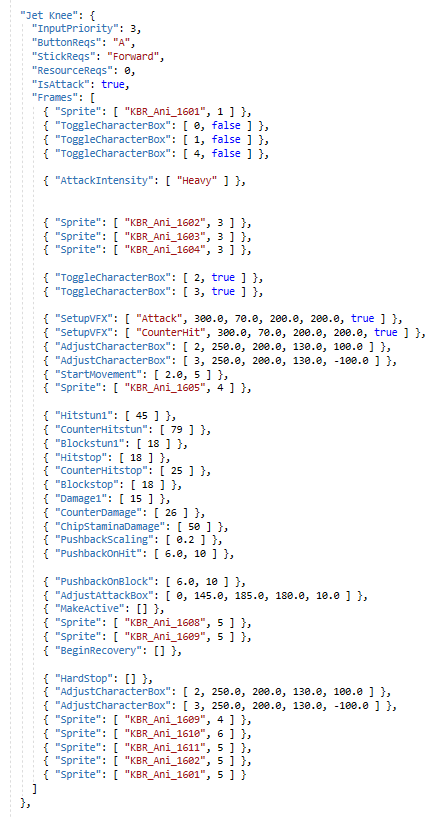
Even outside of making adjustments based on playtesting results, I spent much time making slight adjustments to the characters in order to increase the overall satisfaction of the game feel. In order to make every move feel the best it could, I had to conduct research on many animation principles used for fighting games. Even though I was not in charge of drawing or animating any sprites, it was partially my job to adjust how long certain frames played for, both for game feel, and balance’s sake.
 May W. Games